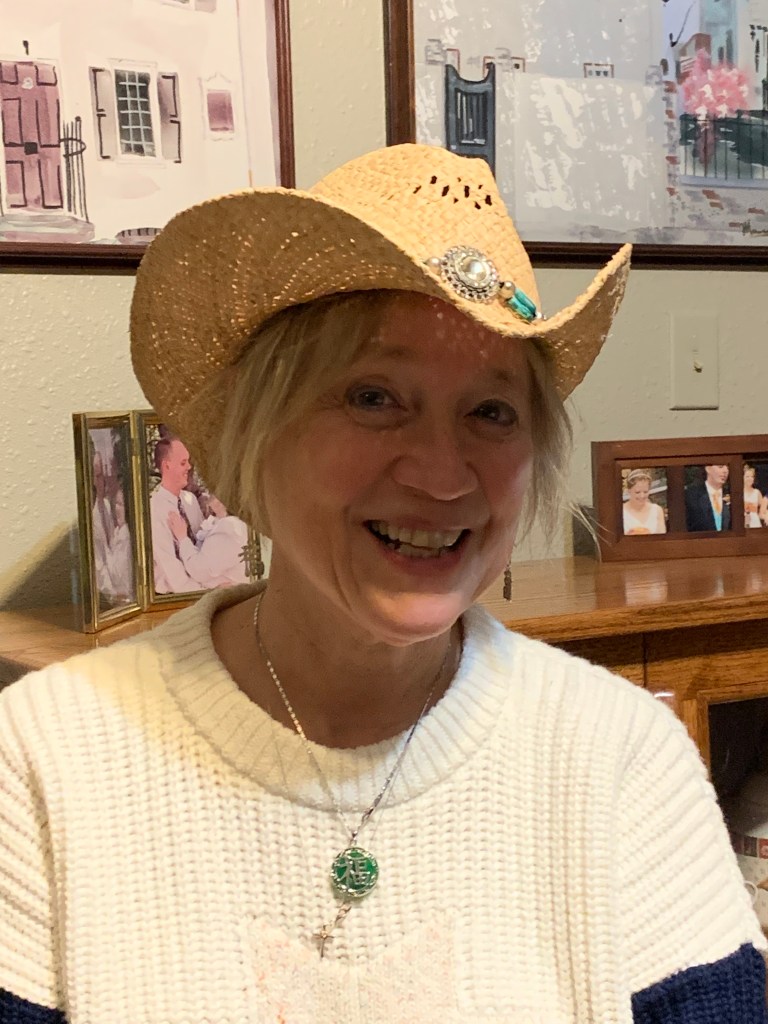
Small Town Living

Our church sits next to the original building called, appropriately enough, The Little Stone Church.  It is sometimes rented out for showers, weddings, other events.  Last weekend it was rented for a craft show.  I went over to introduce myself and the organizer said, “Oh, yes.  I’ve heard all about you.”  The next day I conducted a memorial service where I was introduced to someone from out of town.  She said,“I’ve heard a lot about you”….Small Town Living

              We live close enough to the church for me to walk to work.  This week we had snow.  As I walked to work, I encountered someone blowing snow off what I assumed was his driveway.  I laughed and said, “I need to send you down the street to my house.”  He said, “Where to you live?”  Startled, I gave him my address.  “You live two doors down from my mother,” he replied.  I asked what he charged and he said, in a tone that bordered on embarrassment, “Oh, just whatever you want to pay me”…..Small Town Living.

              The next day I went back to pay him.  When I knocked at the door, to my amazement, Dick, a church member, answered.  It turns out the snow blower is a neighbor, who blows off the snow and shovels the sidewalk for Dick in return for some of Dick’s home-grown vegetables…..Small Town Living.

              I was told when I moved here that helping one’s neighbor is characteristic of this ranching and farming area.  If a farmer or rancher has encountered some problem or disaster, neighbors help out, knowing next time it could easily be you.  And you know that when your time comes, they will just as quickly come to your aid. 

              This awareness that we have some responsibility to others and that we engage in some mutual benefit by serving one another, seems to me to be lost in our current milieu.  So much of what is wrong in the world, boils down to a person or group of persons or a corporation, deeming their needs or desires supersede anything or anyone else’s needs or desires. 

              Years ago I read the book The Navigator, a novel with detailed a group of people who decided to establish their own colony, with no rules.  Anyone could do whatever they wanted.  They discovered this was really untenable.  There had to be some ground rules that made living together in community possible.  Rugged individualism is one thing.  To totally disregard the needs, rights and well-being of others is a totally different thing. May we seek always to be good neighbors and to cultivate community.

May we be bearers of hope, the “wait staff” of Hope’s Café for each other and all those we encounter.  Shalom, Kate

Hope’s Café Bonus:  If you google “Cultivating Community” you will find a group in Portland, Maine, organized to support ” teaching people sustainable farming practices and connecting them to the community through our food hub.” They “support and manage diverse urban growing spaces, enabling community members to grow their own food within city limits.”  They also “increase access to local, healthy foods for low-income consumers, providing affordable produce through CSA shares, farm stands, and mobile markets.”

First Snow

This week we enjoyed the first snow in our newly purchased home.  What is it about snow that just seems to invoke walking in it, playing in it, getting cold enough to go inside and get a hot drink and a good book?

            As a reader who prefers historical novels and mysteries,  I had been searching for a book that would really capture my attention.  Just in time for the snow I discovered Amor Towles’ book The Lincoln Highway.  I had not come across his works before and got curious about him. His personal story I found quite fascinating.

As reported in Time Magazine, September 29, 2021, Towles started writing in first grade, and years later at a Yale seminar was taken aside by Paris Review co-founderPeter Matthiessen, who saw a talent the two made a pact to cultivate. So when Towles broke the news that to please his father, a banker, he was going to work in finance, his mentor was “furious.” America’s finance industry is notorious for skimming the brightest minds from every field. “The people I’ve seen go to Wall Street do not come back,” Towles remembers Matthiessen saying. “So you should assume that at this moment, you have turned your back on writing for the rest of your life.”

Towles would occasionally see Matthiesen and be reminded of his writing aspirations.  After his decade in the world of finance, he concluded that if he didn’t resume writing he would reach 59 “bitter and a drinker.”

His first book, Rules of Civility, was well received and was followed by an even bigger hit, A Gentleman in Moscow. His latest, The Lincoln Highway, is set in the 1950s, opening  with the release of Emmett from a Nebraska reform school, after serving time for the accidental killing of a bully. His little brother has discovered a stash of postcards their mother sent after she abandoned the family and which were never shared by their now deceased father.  Towles searched out vintage post cards and framed his story around the boys’ intention to follow the path of their mother’s postcards across the Lincoln Highway.

One of the signs for me of a good book or movie is that the characters become real enough that I care about what happens to them as the story unfolds.   He definitely creates characters that engage my interest in their lives and fortunes. 

I anticipate I will have many snowy-days reading opportunities.  And snow or not, I wish you many occasions to indulge in a good book.

May we be bearers of hope, the “wait staff” of Hope’s Café for each other and all those we encounter.  Shalom, Kate

Hope’s Café Bonus:  Some of the postcards Towles gathered:

Tempus Fugit

“Tempus Fugit”—Time Flies…..how well I know!  A year ago we were about to wrap up a near four-month stint of caring for our grandsons.  I returned to supply preaching while trying to figure out how to search for a call during covid.  Then when I least expected it, I got a call to, of all places, Montana, where I had never even considered going. Suddenly we were selling our house and moving.  Then last month we bought a house and so we have moved from our apartment into a home—right at the church season of Advent!  To complicate matters, we were without internet for a week and my printer crashed.   

All this is to say, Hope’s Café has been neglected!  I return to you today with the recognition that likely everyone reading this shares the experience of life being disrupted in ways you didn’t anticipate.  So I count on you to “give me some grace,” as I am fond of saying. While in the Christian tradition, grace is the free and unmerited favor of God, another definition is “an extended period granted as a special favor,” the response I am seeking for my delay. 

So, in return for the gift of your grace, I offer this:

Now is the time to know
That all that you do is sacred.

Now, why not consider
A lasting truce with yourself and God.

Now is the time to understand
That all your ideas of right and wrong

Were just a child’s training wheels
To be laid aside

When you can finally live
With veracity
And love.

Hafiz is a divine envoy
Whom the Beloved
Has written a holy message upon.

My dear, please tell me,
Why do you still
Throw sticks at your heart
And God?

What is it in that sweet voice inside
That incites you to fear?

Now is the time for the world to know
That every thought and action is sacred

This is the time
For you to deeply compute the impossibility
That there is anything
But Grace.

Now is the season to know
That everything you do
Is sacred.

– Hafiz

Hope’s Café Bonus: There is a PBS piece  from September 2019 on Joy Harjo, which I could not seem to copy the link to and make it work.   Ms. Harjo is an internationally renowned performer and writer of the Muscogee (Creek) Nation and has been the United States poet laureate.    She is from my native Oklahoma and later taught at my alma mater in Knoxville, TN.  Among many youtube videos of her, there is one available of her reading her poem “Grace.” I would encourage you to check it out.  😊

Welcome Home

This phrase “Welcome Home” has so many meanings for me.  I can recall, as an adult returning to my childhood home, how eagerly my mother greeted me at the door…..and how many times I have experienced that as a mother myself, greeting my daughter’s arrival….and now son-in-law’s and grandsons’. 

 I think of all the evenings years ago when my husband and I walked up the driveway to view our house under construction.  I vivdly recall how I experienced walking in for the first time after everything was moved in.  Now as we cart loads to the house we are about to move into, I feel a sense of welcome when I enter. 

There are other meanings for me.  At one time I volunteered for “Welcome Home,” a hospice program that served impoverished folks who had no funds for hospice care, a blessed endeavor.

In the midst of boxes and memories, I came across today the leaflet from the funeral of my father, (another hospice patient whose final months were in our home).  I share this reading that was included. 

                                                                     To Those I Love

“When I am gone, release me, let me go.

I have so many things to see and do.

You mustn’t tie yourself to me with tears,

Be happy that we had so many years.

I gave you my love.  You can only guess

How much you gave to me in happiness

I thank you for the love you each have shown,

But now it’s time I travel on alone.

So grieve awhile for me if grieve you must

Then let your grief be comforted by trust.

It’s only for awhile that we must part

So bless the memories within your heart

I won’t be far away, for life goes on

So if you need me, call and I will come.

Though you can’t see or touch me, I’ll be near

And if you listen with your heart, you’ll hear

All of my love around you soft and clear.

And then, when you must come this way alone,

I’ll greet with a smile, and say, ‘Welcome Home.’”

For those for whom the holiday season is less a time of “celebration,” and more a time of grief, of loss, of depression; I pray that there is a space of respite from the burden of the holidays and a sanctuary where your heart is at peace, a place of welcome and of home. 

May we be bearers of hope, the “wait staff” of Hope’s Café for each other and all those we encounter.  Shalom, Kate

Hope’s Café Bonus:  For me, a warm drink goes a long way towards soothing my spirits and my mother’s Cranberry Juice Punch lends a festive touch regardless of mood.  This memory of my mother making this in her percolator (remember those?) makes me smile.  This is the recipe she copied for me: 

“9 c. cranberry juice cocktail; 9 c. pineapple juice; 4 c. water; ¾ c. brown sugar; 6 whole cloves, stick of cinnamon.

Mix together and perk in coffee pot (or put spices and water in pan and boil to get flavor—then add other ingredients and heat.)  Serve hot.  Spices I listed are just an estimate as to amount.  You might like less cloves and more cinnamon.”  😊

Irony

About three years ago I began to have some difficulty with my right leg.  Periodically I would get severe cramps in it, unlike any leg cramps I’d ever had.  Peripheral artery disease was ruled out in 2019.  I didn’t get a diagnosis and I dropped the matter.  In 2020 when the problem evolved from cramps to pain that was becoming more and more frequent, I decided to pursue this again.  Knowing that I was likely going to be accepting a pastorate and wanting to get the procedure taken care of before moving, I got a referral to a vascular clinic.    But there was a delay after the ball was dropped in the office where I had completed testing and gotten a diagnosis. Then, though insurance approved it, Medicare denied it.  The day before the movers came in August to move me to Montana, where I had in fact accepted a call to serve a church, I received a call.  The news? That Medicare had approved the process on appeal! Great—except that the move was about to ensue. 

So, now established with a new doctor in Montana, I began the process anew.  I got a referral almost immediately.  The new office was extremely efficient.  And, biggest surprise of all, the nurse practitioner  spent nearly an hour with me!  I got much more in-depth information than I had received in my pre-move appointment and was very impressed with the nurse practitioner.

I am reminded of the Sufi story “Good Thing, Bad Thing.  Who Knows?” which I first heard years ago.  The farmer’s horse runs away…oh no!  Then it returns with a second horse….oh good!  Then the farmer’s son falls off the horse and breaks his leg….bad thing!  Then a war breaks out and the son is ineligible for the draft because he is physically not able….good thing!  He doesn’t risk worse injuries or death.

I was so disgusted when I wasn’t able to get the surgery last summer. (Bad thing!) Now I am much more comfortable with the care I am getting.  (Good thing!)

When we look back at our lives, we likely all can point to experiences such as these.  In 2010, my position was cut from a hospice job I loved and expected to continue to retirement.  I was truly devastated.  But that led to my path towards ministry and a position I deeply love.  And my hospice experience is valuable in this new vocation. 

Ironic as some twists can be on our journeys, all these experiences contribute to the tapestries of our lives.  Think of it as “irony as gift.”

May we be bearers of hope, the “wait staff” of Hope’s Café for each other and all those we encounter.  Shalom, Kate

Hope’s Café Bonus: “No problem comes to you without a gift in its hands.”—Richard Bach

The Milk Run

This week I had the distinct pleasure of helping with the milk delivery to a rural school, K-12 in Raplje, MT.   The son of one of the church members, Viv, is the superintendent at this little school and she offered to do the weekly milk run. She and another church member, Mary, invited me to experience this. 

Rapelje was originally called Lake Basin due to its geographical landscape, but in 1913 it was named after J.M. Rapelje, who was one of the heads of the Northern Pacific Railroad. Rapelje was first established as a town where local railroad workers of the Northern Pacific Railway would live in the late 1800s. As more people began to work at the railroad, the town grew bigger in both size and population. They had multiple establishments such as a hotel, a grocery store, a town hall, a K-12 school, and many other things. A post office was established in 1913, and the four grain towers (which are still there today) were put in business. A railroad destination point, Rapelje developed into a reasonable town with a number of grain elevators, its own school district, an evangelical church, a cafe, and later a violin shop and clothing business. I learned that the mother of Mary, who grew up in the Raplje community, was the one who opened the café and who rented a little apartment at the back of the café to a couple who offered violin lessons.  

In 1980, the railroad was taken out of Rapelje, and the population declined, as well as sales and business. Businesses and residents of Rapelje largely dispersed from the town over the following decades. The hotel burned down, the town hall was removed, and the grocery store was closed. I saw the building that had housed the café and the site where the bank had stood.  Curiously, the vault still sat in a vacant lot, a lone survivor of the long- gone bank building.

So what remains is the church and the school—those two basics deemed necessary to establish every little town.  The church looks well- tended.  The school is an impressive three story- brick building, housing 60 children from kindergarten to grade 12.  An art class at some point had covered the walls in murals with a woodland theme.  On the arch over the stairway was painted “Raplje Park.”  The atmosphere was bright and cheerful. The teachers and staff I met were so very welcoming. The cooks had painted the kitchen in school colors to brighten it up. I had a sense of melancholy for what is lost without small towns, farm communities, and the people who love them and keep them alive.

 May we be bearers of hope, the “wait staff” of Hope’s Café for each other and all those we encounter.  Shalom, Kate

Hope’s Café Bonus: “Living in a rural setting exposes you to so many marvelous things – the natural world and the particular texture of small-town life, and the exhilarating experience of open space.”

– Susan Orlean.

Judgement vs Compassion

I have encountered several situations recently where compassion would have been the charitable response.  Judgement so easily comes first.  I would love to say these were all judgements other people made.  But even ministers are capable of tripping over judgements.

 I got a voicemail from someone looking for a minister to marry her and her fiancé.  Were they a local couple?  No, they were “travelling around and ended up in Montana.”  Some other plan had relied on a relative to arrange for the wedding but that had fallen through.  My first reaction was more of curiosity.  What was the story here?  But I also thought, Really?  As a pastor, I take the authority to perform marriage ceremonies seriously.  This struck me as something of a lark.  I felt a little offended:  Don’t ask me to bless something that is less than full commitment. 

Then I thought back to my own first marriage, how it was all about “being married,” not about being committed.  Who am I to judge?  Even if that were not the case that when I took those vows, I was less fully invested in what marriage would involve, it was still not my place to judge.   Judgement reinforces our sense of superiority; puts distance between us and those folks with whom we don’t want to be identified.

Certainly, in today’s milieu we are in need of some means to build bridges.  Although I don’t have any foolproof remedies for this, I am intrigued with folks like Daryl Davis, 63 year old black man who has successfully engaged Ku Klux Klan members and neo-Nazis.  As reported by Nicholas Kristoff in the New York Times in June:

“Davis began to work on answers after he graduated from Howard University and joined a band that sometimes played in a Maryland bar that attracted white racists. Davis struck up a friendship with a K.K.K. member, each fascinated by the other, and the man eventually left the K.K.K., Davis said.

One of Davis’s methods — and there’s research from social psychology to confirm the effectiveness of this approach — is not to confront antagonists and denounce their bigotry but rather to start in listening mode. Once people feel they are being listened to, he says, it is easier to plant a seed of doubt.”

So perhaps we can at least pause when our first impulse is to judge and seek to at least consider an alternative response.

May we be bearers of hope, the “wait staff” of Hope’s Café for each other and all those we encounter.  Shalom, Kate

Hope’s Café BonusAccidental Courtesy | Film about Daryl Davis Meeting KKK …

https://www.pbs.org › independentlens › documentaries

Small Town Living

              I grew up in a small Oklahoma town, about 9500 population.  Until now, that was the smallest town I had ever lived in.  My new home isn’t quite 2,000.  Some folks who have seen my photos on Facebook have commented that it looks like we live in “Mayberry,” that we seem to have stepped back in time. 

              There is a sense in which this experience does indeed feel like we have entered a time machine.  As a kid, I walked everywhere or rode my bike.  Growing up, Main Street was the focus of the town. Little shops lined the streets.  Lew’s Drug boasted a soda fountain along with medicines and merchandise.  Link’s Drug, the competition, was across the street.    Security Bank where my mother worked was on one corner.  The National Bank was one block down.   The town was on the Chikaskia River, a tributary that eventually becomes part of the Mississippi River.

              In my new home, I can easily reach on foot any place in town I want or need to go.  Main Street is a central “shopping district,” so to speak, where one can peruse little shops, go to the bank or the florist or the auto parts store.  Sadly, the drug stores with soda fountains have mostly disappeared from American culture.  But we do have a Whistle Stop Café and a Chinese restaurant.  And our town is right on the Yellowstone River, a tributary of the Missouri River.

              Here is the pivotal difference in the two experiences:  Growing up, I knew or knew of most of the folks living there.  When I was downtown, inevitably I encountered people with whom I was familiar.  In my new home, I am perpetually aware that I am a newcomer.  People are friendly enough, but I am an outsider.  I met with two pastors of nearby Congregational churches, one of whom I was meeting for the first time.  She asked where I was from.  When I replied “Tennessee,” the other pastor gently teased, “Can’t you tell when she opens her mouth? That lovely accent!” (I am thinking, “What accent??”)

              So as we move on from our known experience to the unfamiliar, we can be certain that change will bring some discomfort.  I am enjoying so many aspects of my new life.  But I don’t like being “the new kid on the block,” aware that other people have deep roots and longtime connections here. I am challenged to consider these folks “ friends I just haven’t met yet”  and  reminded of the old adage “to have a friend, one must be a friend.”

May we be bearers of hope, the “wait staff” of Hope’s Café for each other and all those we encounter.  Shalom, Kate

Hope’s Café Bonus: “There are no strangers here; only friends you haven’t met yet.”—William Butler Yeats        *        “The only way to have a friend is to be one.”—Ralph Waldo Emerson

Ministry

On this day of most unexpected experiences, I got a somewhat cryptic message from someone unknown to me at a sister church.  They had sponsored two young men associated with “sunpedal.”  These men were going to be coming through our town tonight and she said if I wanted to meet them she could give them my phone number.  I asked for more details.  Were they hoping for a meal? Shelter?  She said their church had paid for a night at the motel and fed them a meal. 

To be truthful, I was tired and not inclined.  But as I considered what to do, I got another text where she gave me their contact info.  I overcame my hesitation and texted them.  By the time I did, I discovered not only had they just arrived but they arrived hungry and stopped at a Chinese restaurant downtown. I received their text just as I was walking by that restaurant.   I went in and visited with them, learned about the efforts of their organization to educate people about sustainable energy.  They have been on a four- month journey riding their bikes across the United States seeking to encourage people along the way to support sustainable energy.  They were delightful.  I had consulted with mission committee and told them the church would pay for their night they had booked at Riverside Cabins.  I offered them dinner later if they weren’t too tired. 

I had only just returned to the church, when the phone rang from an area code outside Montana.  On the other end of the line was a rather frantic mother.  Her son Gavin had gone hunting in this region.  He was caught unawares by the snow and the intense wind.  His truck was stuck.  His efforts to dig it out had been thwarted by the wind whipping the snow right back on his truck. He was trapped by five- foot snow drifts that needed to be plowed for him to get out.  She didn’t know exactly where he was but knew it was in this area.

As luck would have it, we have a church member who has a tow truck and I called him.  Before I could describe the dilemma, he told me he had already talked with this young man, He had pinpointed where Gavin was located, unfortunately 18 miles from any paved road and 15 miles from the forest service station.  But the church member’s tow truck doesn’t have four- wheel drive.  He had given Gavin the number of a towing company in another nearby town.  I called Gavin to see what progress he had made.  The other company had their truck in the shop for maintenance.  I suggested he call the sheriff of the county where he is stranded.  He said someone must have called search and rescue because the sheriff had called him.  He supposed someone would come.  He assured me he had extra clothes and food and water. 

I told him I had promised his mother I would call her back, which I proceeded to do.  She talked with me for some time in a manner I recognized.  When I am under stress and there is some kind soul with a sympathetic ear, I just begin sharing all kinds of things about my life.  I learned all about her work cleaning houses; how she considers it a ministry; how she has assisted clients to get into assisted living when they are no longer able to live in their homes.  She told me about her son, how he is a skilled hunter but had never hunted in this area.  She asked me to pray for him.

Ministry happens in most unexpected and unpredictable ways.  I pray to always be open to the unexpected.  And I pray for Gavin’s safety and rescue on this bitter cold and windy night.

Hope’s Café Bonus:
God is our refuge and strength,
    an ever-present help in trouble.
Therefore we will not fear, though the earth give way
    and the mountains fall into the heart of the sea,
though its waters roar and foam
    and the mountains quake with their surging. Psalm 46:1-3 New International Version

Possessions, Priorities, Proportion

This Sunday I will be preaching on priorities, based on the story of the “rich young ruler.”  He seeks Jesus out to find what else he could be doing in his quest for “eternal life,”beyond the commandments he has already been living out.  Jesus really throws him a curve:  sell all you have and give it to the poor and come follow me.  Oops!  No further conversation is recorded but one might imagine his protesting “No, I was looking for something practical, something a little less stringent.  I mean I have a lot of possessions.  Surely you don’t mean ALL of my riches.”  Perhaps Jesus would have regarded him with compassion but said nothing in reply, leaving the young man to contemplate his life and his willingness to enlarge his understanding beyond “living by the rules.”

              Having just gone through the experience of divesting ourselves of our home and land, I am aware of an aspect of this that the young ruler couldn’t seem to grasp: the great relief of letting go.  We are renting and down to one vehicle.  We look at property to buy.  We consider a second vehicle.  But I recognize, even as we do so, a sense of hesitation.  We seem more and more content to live in our current circumstances.  Given that we have moved to snow country, we likely will purchase a four -wheel drive vehicle soon.  But this feels like a purchase of necessity and not of desire.   As I contemplate how we use our resources, I hope to consider future spending more thoughtfully.  I am reminded of Richard Foster’s guidelines for simplicity:

  1. Buy things for their usefulness rather than their status
  2. Reject anything that is producing an addiction in you
  3. Develop a habit of giving things away
  4. Refuse to be propagandized by the custodians of modern gadgetry
  5. Learn to enjoy things without owning them
  6. Develop a deeper appreciation for the creation
  7. Look with a healthy skepticism at all “buy now, pay later” schemes
  8. Obey Jesus’ instructions about plain, honest speech
  9. Reject anything that breeds the oppression of others
  10. Shun anything that distracts you from seeking first the kingdom of God

May we be bearers of hope, the “wait staff” of Hope’s Café for each other and all those we encounter.  Shalom, Kate

Hope’s Café Bonus:  Check out this site with article “7 ways to unstuff” https://simplelivingworks.wordpress.com/2014/01/14/yes-magazines-7-ways-to-unstuff/#:~:text=YES!%20Magazine%E2%80%99s%207%20Ways%20to%C2%A0UnStuff